

Castlegar Rally Calls for Protection of Cai Creek Amid Logging Concerns and Plan Discrepancies

By Contributor
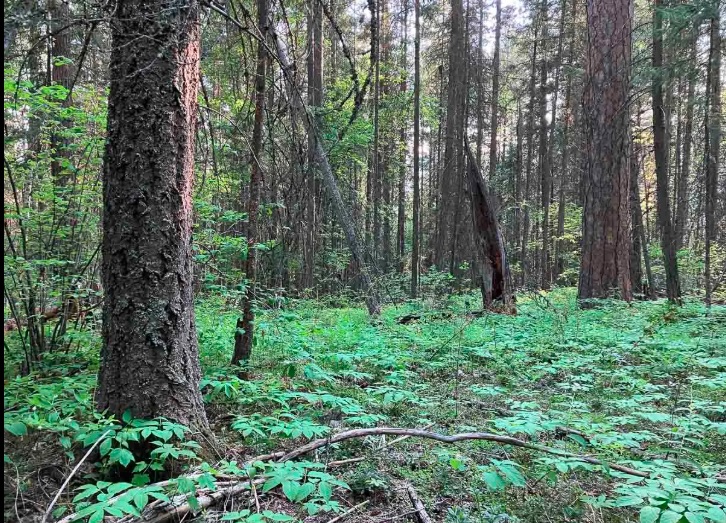
Following the establishment of a peace camp along Cai Creek Forest Service Road and a subsequent industry-led walkthrough that raised questions about the legitimacy of logging plans, residents are rallying at Castlegar City Hall to call for the protection of the watershed and its valued hiking trail.
On Oct. 29, community members, forest advocates, and industry representatives toured BC Timber Sales cutblock TA2185-3 in Cai Creek, an intact watershed just outside Castlegar that is slated for logging by Interfor.
The site visit was organized to address community concerns about the irreversible ecological and recreational impacts of the proposed 50 hectare cutblock that will extend 2 km across the Cai Creek drainage. The cutblock was developed by BC Timber Sales (BCTS), the timber auction won by Cole Sutherland in March 2025, and the logging rights now managed by Interfor’s Castlegar Division.
Tour participants included Keenan Dennehy, a forestry reform advocate based in Salmo, Matt Casselman, a biologist living in Castlegar, representatives from Interfor and BCTS, as well as members of the peaceful protest preventing logging in Cai Creek, which has been ongoing since October 21st.
“The value of this forest is multifaceted,” says Dennehy, founder of 4theloveofbc.ca. “It’s extremely rare to have a largely unroaded, intact watershed so close to a community and so accessible for education and recreation.”
Community opposition to the logging dates back to 2024, when Casselman collected 450 in-person signatures for a petition to defer logging in Cai Creek. In 2025, nearly 100 comments were submitted to BCTS on the Cai Creek logging plans with all but four opposed to the logging.
Casselman summarized the problem he sees with the cutblock as well as BCTS’ response to public feedback.
“Despite extensive public comment, there were no meaningful changes to the Cai Creek cutblock plans. Then after the comment period, BCTS staff circulated an inaccurate fact sheet claiming no old growth trees were present in Cai Creek. I had to email BCTS to get the fact sheet corrected and even then, the new fact sheet misled the public on the extent of protections for the veteran trees in Cai Creek.”
The issues Casselman found with the cutblock planning and BCTS’ conduct led him to file a complaint with the Forest Practices Board in October 2025. Although Casselman’s complaint is ongoing, concerns and inaccuracies around Cai Creek were on full display during the site visit with BCTS and Interfor.
“BCTS claimed in their fact sheet that trees >55 cm diameter would be retained in the southern portion of the Cai Creek cutblock. But Interfor, BCTS, and myself stood in the southern part of the block, amongst cedar and larch at least 80 cm in diameter, and none of the trees were marked for retention.”
Nelson-based ecologist Dr. Rachel Holt, a member of the Minister’s old growth technical team tasked with mapping recommendations for the 2020 Old Growth Strategic Review, suggests that Cai Creek will be a test of whether recommendations to reform forest management and improve forest resilience are taken seriously and put into practice.
“The ecological values at Cai Creek are very high – including very large old trees, high ecological variability and location in a rare intact area. Implementation of existing policy for old forest protection in the Kootenays has been very weak – the province’s own data show less than 20% of Old Growth Management Areas (OGMA) contain old growth forests. The Cai Creek area should be managed to maintain very rare ecological old growth values and improve resilience, not industrially harvested.”
A trail into Cai Creek that leads to BC’s largest Ponderosa Pine has become a popular hiking destination, with over 1,200 recorded visitors since 2024. As the tour hiked down from Cai Creek, the group encountered several hikers along the trail, all of whom expressed opposition to the proposed logging.
“It was clear that the community’s message had been heard,” said Emily Tidmarsh, who attended the walk. “Interfor and BCTS may have listened to our concerns, but neither seemed willing to take responsibility for addressing them.”
“We told them that, based on the science and the hundreds of messages from the public, the best outcome for both the community and the forest would be to leave Block 3 entirely unlogged, rather than simply retaining a few additional trees,” said Dennehey. “From an economic perspective, retaining enough trees could also make the operation financially unviable given the reduced timber yield.”
Meanwhile, participants in the ongoing peaceful protest remain committed to protecting the watershed.
“Being a part of this movement feels like a way to live my values of protecting old growth, fighting for a better future, and living in community,” says Emily Tidmarsh. “We have the numbers to sustain camp through the winter if needed. We won’t leave until Cai Creek is protected from logging.”
Although Interfor’s representatives committed to bringing the community concerns around Cai Creek to their managers, as of November 15, there has been no response from Interfor. Despite the silence, local residents continue to pressure Interfor, mobilizing through peaceful protest, letter campaigns, and discussions with RDCK Area J Director-elect Greg Zaitsoff and the office of the MLA-elect Steve Morissette.
A rally to raise awareness around Cai Creek is being organized for Sunday Nov. 22, 2–4 p.m. at Castlegar City Hall. The message is clear: Cai Creek is worth protecting, and the community isn’t backing down until industrial logging in Cai Creek is off the table.


















Comments