

Black bears' favorite wild foods

By Contributor
By Nancy Bulman, Sue Wrigley and Kathy Moore, of the Bear Smart Task Force
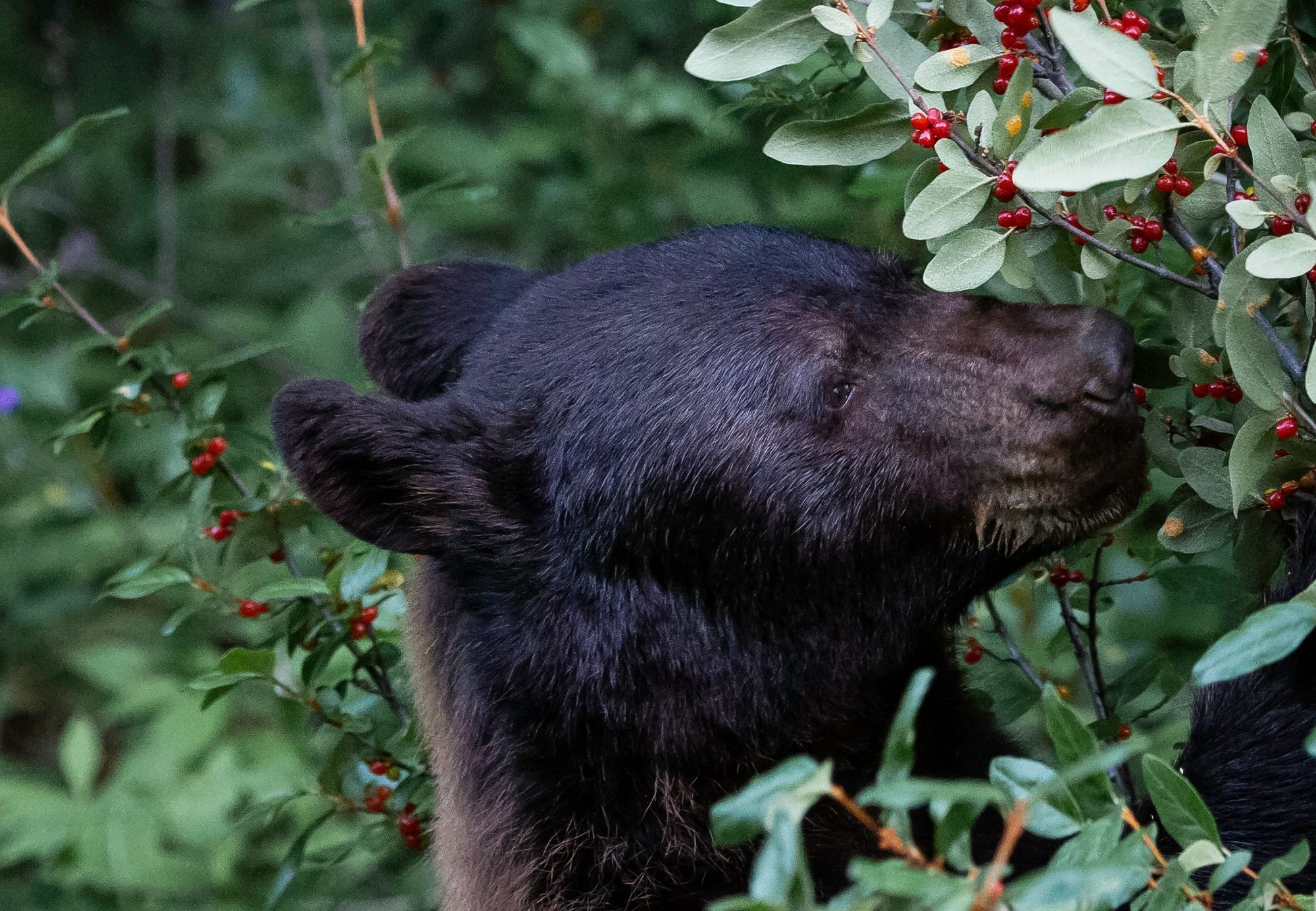
The wild black bears in our forests can find a lot of great food. We needn’t worry about them. They are omnivorous and opportunistic eaters, and their keen sense of smell leads them to a variety of food that many other wild animals don’t have the stomach for.
For comparison, a buck white-tailed deer weighing 250 pounds requires approximately 6,000 calories per day to maintain its weight. A male black bear weighing 250 pounds needs approximately 5,000 calories during the summer. The significant difference is that deer are herbivores; they don’t get calorie-packed bug larvae and small rodents in their diet. Bears also dig for food, which allows them to unearth rich roots and tubers.
These rich foods allow the bear to nap, a thing you rarely see a deer doing. Wild bears are generally crepuscular, meaning they are most active at dawn and dusk. During a summer day, they often retreat to shaded, secluded spots to rest and stay cool. They might nap under dense bushes, inside hollow logs, or on the forest floor, blending seamlessly into their surroundings.
The male black bear will wake up to a beautiful July morning and look for breakfast. They find some dandelions still in bloom and, along with some dew-covered grasses, sedges, clover, and maybe a bit of skunk cabbage, they’re off to a great day.
The bugs are awake and busy. With powerful clawed paws, our bear tears open a decaying log and feasts on carpenter ants. Opening the nest, he finds the real prize, larvae. It’s beginning to get a bit warm, so berries are a good snack to round out the morning. The berry options are excellent: huckleberry, wild blueberry, salmonberry, elderberry, devil’s club, wild raspberry, highbush cranberry, and salal. He remembers where the bushes are that won’t be ripe until later in summer or early fall, when he needs to increase his caloric intake to nearly 20,000 per day before winter arrives.
Nap time.
As the sun goes down, it’s time to feast again. Though nuts are a favorite, they’re not ready yet. He wanders to a sunny area where plants of the pea family grow. Sweet-Vetch is a favorite. The entire plant is beneficial, but the roots must be tasty and rich. We can see dug-up earth around these plant areas. Other roots and tubers available are arrowhead, burdock, cattail, and jerusalem artichoke. A dead ground squirrel is nearby, and being a carrion eater, that’s a good find. A few more bug nests and a visit to the stream to munch on water plants and fern heads, get a drink, and it’s time to sleep.
As this article points out, there is an abundance of food available in the wild for bears. However, they are opportunists; if given the option to forage in easily accessible human garbage, they will take advantage, thus getting into trouble in town. Be sure to secure all garbage, bird feeders, and pet food to keep our community and the local wildlife safe.
Volunteers of the Rossland Bear Smart Task Force wrote this article. Find our web page on the Rossland Sustainability site: https://rosslandsustainability.com and tap the Bear Task link.




















Comments