

Editorial: Clear-cutting forests, losing water.

By Sara Golling
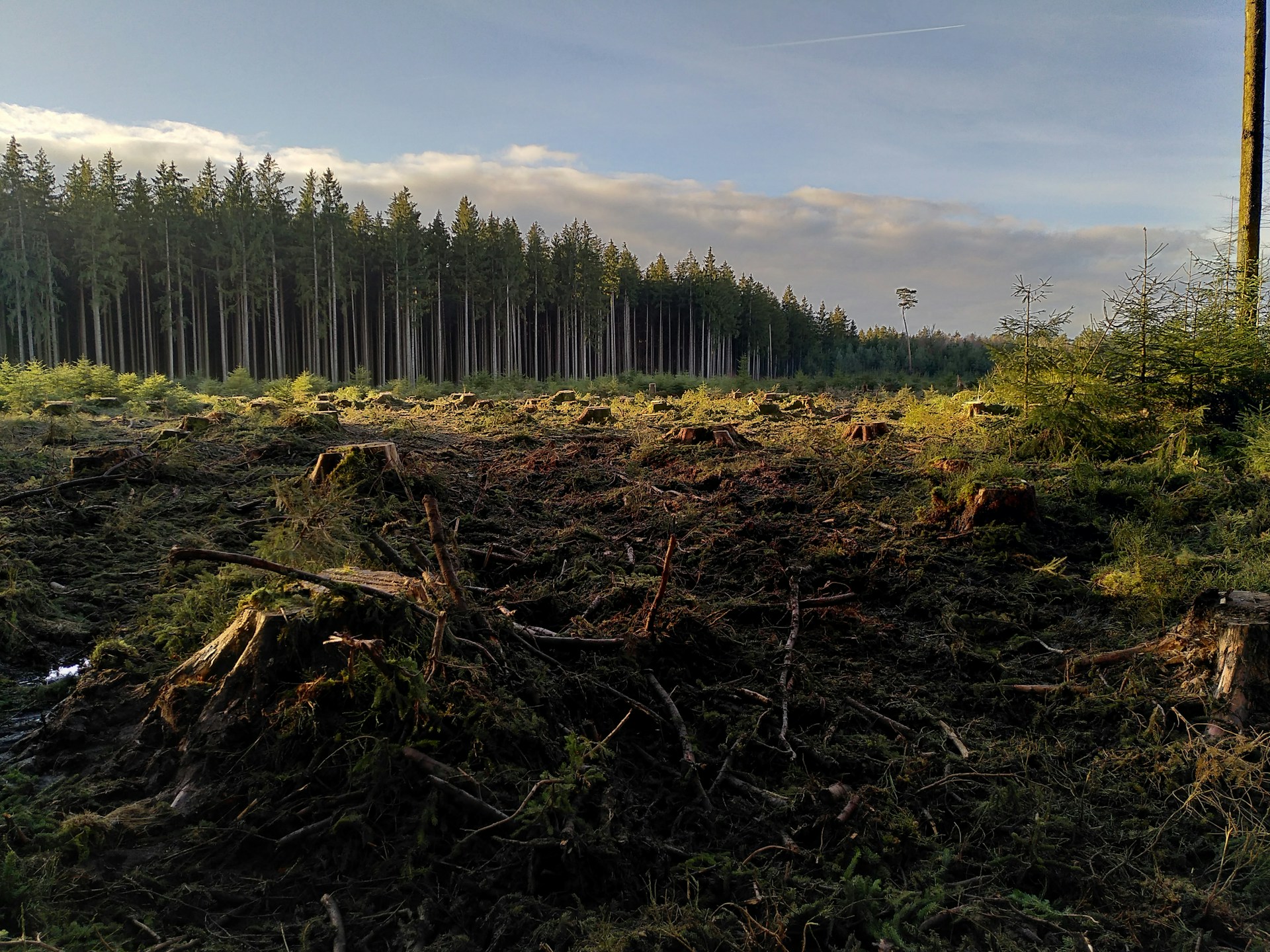
When large tracts of forest are clear-cut, we lose more than the trees and their shelter and all the other plant and animal species they nurture and protect; we also lose water.
Our demands for water are increasing.
Growing populations, water-hungry industries (including fracking and nuclear power production) and the growth of data centres all demand more fresh water, even as our continuing use of fossil fuels accelerates climate change and increases the duration and intensity of droughts – and our supply of water is shrinking; agriculture has been sucking “fossil” water from aquifers and those aquifers are not being recharged as fast as they are being drawn down. The oil and gas industry also uses large volumes of water, and pollutes groundwater too, not to mention rivers such as the Athabaska. Many of our rivers are fed by glaciers, and the glaciers are melting away.
Climate change also increases the intensity of rainfall events; warmer air holds more moisture that can be released in violent downpours. Flooding is more frequent. And that is exacerbated — made worse – by removing forest cover from so much of our land.
Mature forest land is like a sponge; it soaks up water and can release it slowly. Areas that have been clear-cut are more like sieves – the water just runs through (and off) the land quickly, leaving much less moisture to last through a dry season. Streams fed by mature forest land will run longer, with more stable flows. Mature forest is a form of both water storage and flood control.
And large tracts of forest are more than that — they also help prevent droughts; they generate rainfall. Evapotranspiration: trees take up water from the soil and breathe it out into the atmosphere, where – if there is enough forest left to have this effect – it will form clouds and precipitation. The more of our forests we cut down, the more vulnerable we will be to all the knock-on effects of drought and wildfire.
A recent UBC study of 657 watersheds confirms that loss of forest speeds runoff; this might seem like a no-brainer, but having quantified scientific evidence may help convince those who could, if they were sufficiently interested, regulate the speed and scope of clear-cutting. The UBC study is discussed in an article in The Conversation.
The information I’ve cited above is not new knowledge – sometime around 350 BC or thereabouts, the ancient Athenian Plato wrote,
Mountains which now have nothing but food for bees … had trees not very long ago. [The land] was enriched by the yearly rains, which were not lost to it, as now, by flowing from the bare land into the sea; but the soil was deep and therein received the water, and kept it in the loamy earth … feeding springs and streams running everywhere. Now only abandoned shrines remain to show where the springs once flowed.
Ronald Wright quoted this passage from Plato in his excellent book, A Short History of Progress.
What can we do to keep our forests and their water-conservation services? We can start by being “woke” in the environmental sense, as well as the social sense; that is, to be aware of important facts and how they are likely to affect us, and by exerting every possible influence we can to prevent further environmental degradation. It will take a lot of influence, from a lot of people, to counteract the lobbying and other forms of pressure from the various industries that want to continue either large-scale or incremental clearing of forest land.
We have observed, from the life work of David Suzuki (now that he is 90 years old), that even a motivated and dedicated scientist well-covered by media can have little effect against the interests of shareholders and their industries. It will take widespread pressure from voters to make any meaningful difference.
So, dear readers, get out there and push – if you want your children and grandchildren and all their relations to live non-dystopian lives.
















Comments