

Column: What hiStory do Canadian Story-tellers carry?

By Charles Jeanes

“A country without a history doesn’t have one. And a country without a soul is barely a country at all”. – Globe and Mail editorial, 2001
Introduction: what we’re telling ourselves about Canada
Canadians have been offered some grim, guilt-inducing, intentionally uninspiring perspectives on the history of this country by people who would describe their own politics as progressive or woke. The negative stories, which take their stand on a sad sense of injustice to aboriginal populations — who lost so much when British colonial empire was thrust upon the land and people here –are one piece of a large whole.
Judged by the morality of 2025, colonization is crime: that’s the main event, the meaning, of Canadian history.
[Please read the Appendix.]
But in no way is that viewpoint adequate as a summary history of this country.
The notion that History ought to be about judging Past people’s behaviour as measuring up to – or failing – the moral standards of the Present, is of little value, in my opinion.
The idea that the dominant motif of Canadian history is, “genocidal wrongs done to the indigenous population,” is an idea professional historians combat. Well, some historians combat. Some have little to say about it, oddly.
I do not propose to refute a particular point-of-view. I will advance my own.
The Story you carry
The story one carries in the mind about the nation-state we live in, Canada, is not a neutral narrative.
If one mostly holds to the perspective of basic injustice – that no fact is more important than the wrong done to indigenous human rights – one is quite likely to join the camp of those who deny that Canada has ‘a right to exist’ because its foundation is theft, violence, and genocide, a tale of wrong against natives. “A country originating in such wrong is immoral.”
If that’s the stance you hold, and won’t relent, you should stop reading here.
History isn’t a morality tale: historians, political causes, and case-making
I want to stress “professional” historians here. It is the mission of professionals to maintain consciousness of the purpose, method, and philosophy of History, and assert that consciousness to the great majority of the public who generally do not trouble themselves with larger questions: defining what History is, what it is for, whom it educates, and its place in the culture of a democratic, open society. Canadians need education on the topic.
In my opinion, professional historians too need some guidance on their role in how Canadians learn history. We — historians — need to resist the abuse of history that political cause-mongers practice. History is not served by selective fact-citing whose intent is moralizing about past people and “proving a case” in present political discourse. When one’s highest purpose is to advance a cause, such as the champions of “de-colonization” pursue, then History comes in for abuse. It is my intention to oppose abuse of History, not one political cause.
Two Questions for Canadians about Colonialism
There are two questions about the changes of population of the “New World” –from the time Europeans crossed the ocean to the western hemisphere — that are (in my view) an optimal theme within the recent history of two continents:
(1) What would the relationship of the ancient natives with the new incomers be?
(2) Would the newcomers re-create the conditions of the old-world Europe? Would the new world and its natives re-shape the immigrants, assimilate them — and be immutable themselves to attempts to europeanize them?
To the first question, the reply can only be that there were a multitude of human relationships, from individual marriages of two people, to collective mass wars among societies and nations; the fundamental fact is: the newcomers imposed their ways on natives or drove natives out of the settler territory. No one would deny vast disadvantages and losses of/for natives.
And that reply tells one the answer to the second question: the newcomers did for certain try to recreate the Culture [in every sense of that word] of places they came from, and tried to induce/force indigenous folk to conform with it.
Natives did indeed try to hold fast their own very culture; none of these people flourished under colonialism. Some indigenes resisted more, some less. And some few Europeans joined indigenous cultures and became assimilated.
A synthesis: homo sapiens and the universal phenomenon of colonies
Colonization is a theme of the human past; everywhere humans arrived new, on land they had not lived before, disturbance to previous ecology was a fact. This was an original transformation and it set in motion vast other changes.
Recognition of this process is where one begins. ‘New’ humans are colonists.
I am trying for a larger perspective on the behaviour of homo sapiens, a stance that sees our species across History as one grand experiment.
All of what humans have done is the experience of our species, and in a sense, is an experiment without the controls that scientists use in the laboratory in rigorous experimental conditions. Study history as an experiment.
On our planet, there are no human societies that were founded without some demographic change on the land; humans had to come from our land of origin — part of Africa — and populate new ground. This is ‘colonization’ of land by our species. Sometimes there were other humans on the land before the arrival of newcomers; sometimes those humans were not even homo sapiens.
Morality and History: is the Past a place to judge the good and the evil?
Was “injustice” also a fact? Yes. By absolute standards of abstract, universal justice for ‘human rights’, the dispossession [theft] of land occupied/owned by indigenous people was a historic “crime”. (Or, if there were no indigenous humans dispossessed, there were certainly other species whose lives were not respected by humans. The right to life might be extended indefinitely, yes?)
Then, all human history is the story of wrongs done, because the species called homo sapiens migrated from Africa into Eurasia 150,000-200,000 years ago and eventually displaced all the other human species, the ones now gone extinct. (notably Neanderthal and Denosivan, species who went before us to Eurasia.
https://www.sciencealert.com/did-homo-sapiens-kill-off-all-the-other-humans
Specifically Canadian Colonial History: Truth, Reconciliation, Identity
The topic of truth — and reconciliation — cannot be avoided in my discussion of History in Canada but neither can I do justice to its complexity. Here my aim is only to critique the TRC (Truth and Reconciliation Commission) as an institution to educate Canadians about our history. The TRC did not study all our history.
Canadian history is a lot more than specific residential schools, the crimes committed there, and the policies of assimilation. Canadians need to seize the study of our colonial past as a political issue because it is a political issue. Believe that your country is a criminal enterprise, and how can you feel strength in our identity to resist American aggressions?
Canada chose to copy the name of a commission set up in South Africa, and from that mistaken naming, Canadians have lost clarity. South Africa’s TRC had a much larger, deeper mandate, and Canada still might set up a commission to study history and more profoundly to address colonialism. We have not done so yet.
Our TRC was focussed on residential schools, not events and policies of the past since Europeans colonized this land. Historians would play a major role in investigating colonial history, as they did not do in Canada’s TRC.
https://rsc-src.ca/en/node/3643
https://nctr.ca/about/history-of-the-trc/truth-and-reconciliation-commission-of-canada/
https://atjhub.csvr.org.za/south-africa-truth-and-reconciliation-commission-1996-2002/
Our TRC had specific, mandated purposes; 94 recommendations emerged. (Few have been enacted. Canada has signed UNDRIP.)
When words get in the Way: Reconciliation begins by not using insults
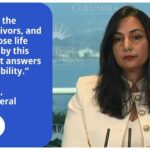
I fully admit that in my criticism of the TRC, my view is refuted by Canada’s Chief Justice who accepts that “cultural genocide” is the 21st-century phrase to use whereas the 19th-century “buzz-word” was “assimilation.”
“The objective – I quote from Sir John A. Macdonald, our revered forefather – was to ‘take the Indian out of the child,’ and thus solve what was referred to as the Indian problem,” Chief Justice McLachlin told an annual Pluralism Lecture last week held by the Global Centre for Pluralism. “‘Indianness’ was not to be tolerated; rather, it must be eliminated. In the buzz-word of the day, assimilation; in the language of the 21st century, cultural genocide.”
https://reviewcanada.ca/magazine/2019/10/no-genocide/
I reject “cultural genocide” as the correct phrase to describe the policies of assimilation. The debate, despite some people’s disagreement, is not over.
To my great dismay, the Commissioners in their wisdom chose to label the policies of the Canadian governments, federal and provincial, as “cultural genocide.” This use of language is, to my mind, the kind of imprecision in wording that makes things less understood, not more. Genocide has a legal meaning; adding “cultural” to it is making the word genocide less meaningful, not more.
Chief Justice Beverly McLachlin aligned herself with those who advocate using the word genocide. Former P.M. Paul Martin is another. They erred.
For me, what matters is that in the present non-native Canadians accept that we can indeed make restitution to natives for past injustice.
Using the word genocide is not a way to bring Canadians together in reconciliation, whereas no one is insulted by the word assimilation.
We do have to compensate the indigenous peoples for their losses. We must make restitution for our wrongs. We have violated Treaties made with them, and that is breaking our very own laws. And no Treaties were signed to cede some land to the Crown in the past, as our laws also required our government to do — outstandingly, BC is by far the world offender in not having acquired native land by cession, so that 85% is unceded.
Canada is accountable to the indigenous people for wrongs against them that are recognized as rights violations. But I am quite at peace with a different phrase: “crimes against humanity.” Canadian colonial policies were criminal, inhumane, and went against the morality of our best people in the recent past.
One violated Treaty at a time, one case at a time arguing Aboriginal Title as defined in our Constitution, is how we get to reconciliation, in my opinion. I am quite clear that insulting non-native Canadians by imputing guilt and shame to them for the actions of past Canadian governments, churches, schools, and individuals – European colonial entities – is wrong. It serves no purpose.
Getting outside the frame of right-and-wrong
A more-encompassing appreciation of what happened on this land we now call Canada – some readers will be saying in their mind, “so-called Canada” – is demanded. I simply reject that the value of History is to judge the Past. My opinion is not an amateur’s; I claim – or “self-identify” – that I am an historian.
I will not be silent when I hear people of the present judge people of the past for failing to meet present moral measurements of right and wrong.
In anthropology, one learns from the outset that relativism is the appropriate perspective on alien cultures. Do not presume your culture is a norm.
In 21st century conversation, a phrase heard frequently but not heard before is the use of the word “other” (alternatively, “otherize”) as a verb. The way to increase one’s empathy, one’s compassion, is to stop perceiving a person you disagree with, as The Other. Reach for a perspective where one can fully appreciate that you and that person are one. {lyrics to I am the Walrus]*
https://medium.com/original-philosophy/the-othering-bias-the-main-problem-holding-back-every-society-ever-1cd2143f104b and https://ethics.org.au/ethics-explainer-the-other/
Conclusions: demonizing historic figures; ‘de-colonizing’; reconciling
This is what I would advise people today who feel so comfortable condemning someone in the past as a villain, an evil person, the source of an evil policy such as residential schools. Ask how that person felt or thought, and why.
You were not there, then. You were not formed in that culture, that time, that place. If John A. Macdonald must suffer your calling him a racist, misogynist, or whatever insult comes to your woke mind, where do you get your right to be so superior?
The Past is a Foreign Country; the people there are not you. Their ways were not yours. Their interior – culture, mental furnishings, morality, ethics – were not yours. How could they be, given that time separates you from them?
People of the past do not want your forgiveness, but understanding them would be a great start to reconciling yourself with the history that has made you, you.
Canadians are awake now to a threat from American power, and it would help us in this almost-crisis to know why Canada is worth preserving. One begins to feel some attachment to this land by releasing one’s judgment that Canada has no right to exist, that it is an illegitimate place founded on criminal acts and if the world were a better place, there would be no countries originating in colonial population changes.
A favoured word in public discourse on the progressive end of political opinion – a “buzz-word” as Chief Justice McLachlin might say – is “de-colonization.”
You have definitely heard this word if you are a regular CBC listener as I am; I’ll give you a recent example:
“Decolonization is on every “woke” Twitter feed and news outlet across North America, and yet we still struggle to talk about the day-to-day, in-context, reality of what it even means. To me, decolonization is an action. It involves actively engaging in work where we intentionally take steps to undo colonialism.” — Evelyn Bradley, CBC host, 2023 https://www.cbc.ca/news/canada/nova-scotia/community/evelyn-bradley-all-in-newsletter-feature-1.6818348
To conclude today’s column, I offer a compact with the progressives who want me to “de-colonize my mind”, as they say on CBC: make an agreement that you have an obligation to “historicize your mind,” and I will double my own effort to be conscious of the effect of colonial history on my personal consciousness.
A mind that is historicized is the mind professional historians would love to see in the Canadian public. A mind that does what I ask from my contemporaries in Canada, my fellows who have great affection for this country, we who most assuredly wish to see it survive America and other perils to our existence.
Herewith, my “ask” from the allies of natives who are not themselves native:
1) Cease to judge people of the Past as your moral inferiors.
2) Try very hard to empathize with the mind of people in the Past who did things you would never do in 2025, but for whom their reasons seemed valid.
3) Have compassion for their mistakes, understand their mental process, and do not ask that a person’s reputation be ruined because of things they did then that do not pass today’s measure of a good, progressive, moral, ethical being. Good intentions in such people must indeed mitigate the result, which was not good.
Do I ask too much? I think not. To ask for empathy and compassion is not to require too much of anyone.
_____________________________________________________________
Essential Appendix
“… the overarching narrative of the Trudeau government is a woke progressivism that projects western culture as a hierarchy of power, one of oppressors and the oppressed. This woke world view is guilt-based, where success is achieved through force, and authority is undeserving. In the last eight years, Canadians have been re-educated to understand our country is founded on genocide, theft, racism and oppression.” — Niagara Independent, June, 2023
https://niagaraindependent.ca/trudeau-erasing-canadian-history-to-achieve-his-post-national-vision/
“When Justin Trudeau said ‘there is no core identity, no mainstream in Canada’, he was articulating a uniquely Canadian philosophy that some find bewildering, even reckless – but could represent a radical new model of nationhood.” — Charles Foran, the Guardian, 2017
More about “decolonization”: https://www.cbc.ca/radio/day6/episode-341-comey-s-testimony-things-arab-men-say-the-moth-at-20-come-from-away-at-the-tonys-and-more-1.4151513/ryan-mcmahon-s-12-step-guide-to-decolonization-the-treaty-edition-1.4151628
“so-called Canada” and the Canadian intelligentsia [from Google AI] :
The phrase “so-called Canada” is used primarily by Indigenous activists, academics, and social justice movements to challenge the legitimacy and authority of the Canadian state. It is intended to draw attention to the historical and ongoing impacts of settler colonialism on Indigenous peoples and their sovereign lands.
The “Canadian intelligentsia,” particularly within certain academic and intellectual circles (such as in fields like Indigenous studies, gender studies, and some humanities and social sciences), are participants in this discussion and often use the phrase as part of a critical discourse.
The Meaning of “So-Called Canada”
The phrase “so-called Canada” challenges the conventional understanding of the country’s founding and existence in several key ways:
Challenging Historical Narratives: The name “Canada” originated from a misinterpretation of the Huron-Wendat-Iroquois word kanata (meaning “village” or “settlement”) by French explorer Jacques Cartier. The phrase highlights that the land was never legitimately known as “Canada” to its original inhabitants, who had their own names for their territories (e.g., Turtle Island, Manito-wapâw).
Questioning Legitimacy and Sovereignty: The term directly challenges the federal government’s claims of authority over lands that were often acquired through violence, forced displacement, and treaties that have not been honoured. It argues that the Canadian state was established without the free and informed consent of the more than 50 sovereign Indigenous nations that existed (and continue to exist) on the land.
Highlighting Ongoing Injustices: The use of “so-called Canada” is often linked to contemporary issues, such as the lack of clean drinking water in many Indigenous communities, the climate crisis driven by resource extraction, and the continued systemic oppression faced by Indigenous peoples. It implies that the country’s governing systems are rooted in colonialism, capitalism, and white supremacy.
An Invitation to Reflection: For some, the phrase serves as an invitation to non-Indigenous people (settlers and newcomers) to recognize the true history of the land and their responsibilities to the Indigenous peoples on whose territory they live.
The Canadian Intelligentsia and the Phrase
Members of the Canadian intelligentsia are instrumental in the use and popularization of the term within academic and activist circles.
Academic Discourse: The phrase is common in scholarly works, university syllabi, and academic journals related to Indigenous studies, post-colonial theory, and climate justice. Academics use it to deconstruct traditional narratives of Canadian history and to foster a critical understanding of the country’s identity as a settler-colonial state.
Activism and Social Movements: Intellectuals and activists employ the phrase to frame discussions around reconciliation and the “Land Back” movement, advocating for a fundamental transformation of society toward one rooted in Indigenous rights and justice.
Controversy and Perception: While the phrase is seen by its users as empowering and truth-telling, it sparks controversy and anger among others, particularly some segments of the general public and political commentators. Critics often perceive the term as a rejection of Canada’s existence as a unified nation and an attempt to dismantle the country.
In essence, “so-called Canada” is a term used by some of the intelligentsia and others to challenge the perceived moral and legal foundations of the Canadian state, insisting on the recognition of Indigenous sovereignty and the ongoing impacts of colonialism.
For a conservative push-back against the ‘woke’, please see also: https://thehub.ca/2023/12/07/christopher-dummit-we-are-telling-the-wrong-story-about-canada-and-the-consequences-are-enormous/
We are all One
I am he as you are he, as you are me and we are all together
See how they run like pigs from a gun, see how they fly
I’m crying
Sitting on a cornflake, waiting for the van to come
Corporation tee-shirt, stupid bloody Tuesday
Man, you been a naughty boy, you let your face grow long
I am the eggman, they are the eggmen
I am the walrus, goo-goo g’joob
(From “I am the Walrus”, a Beatles song written by John Lennon)






















Comments